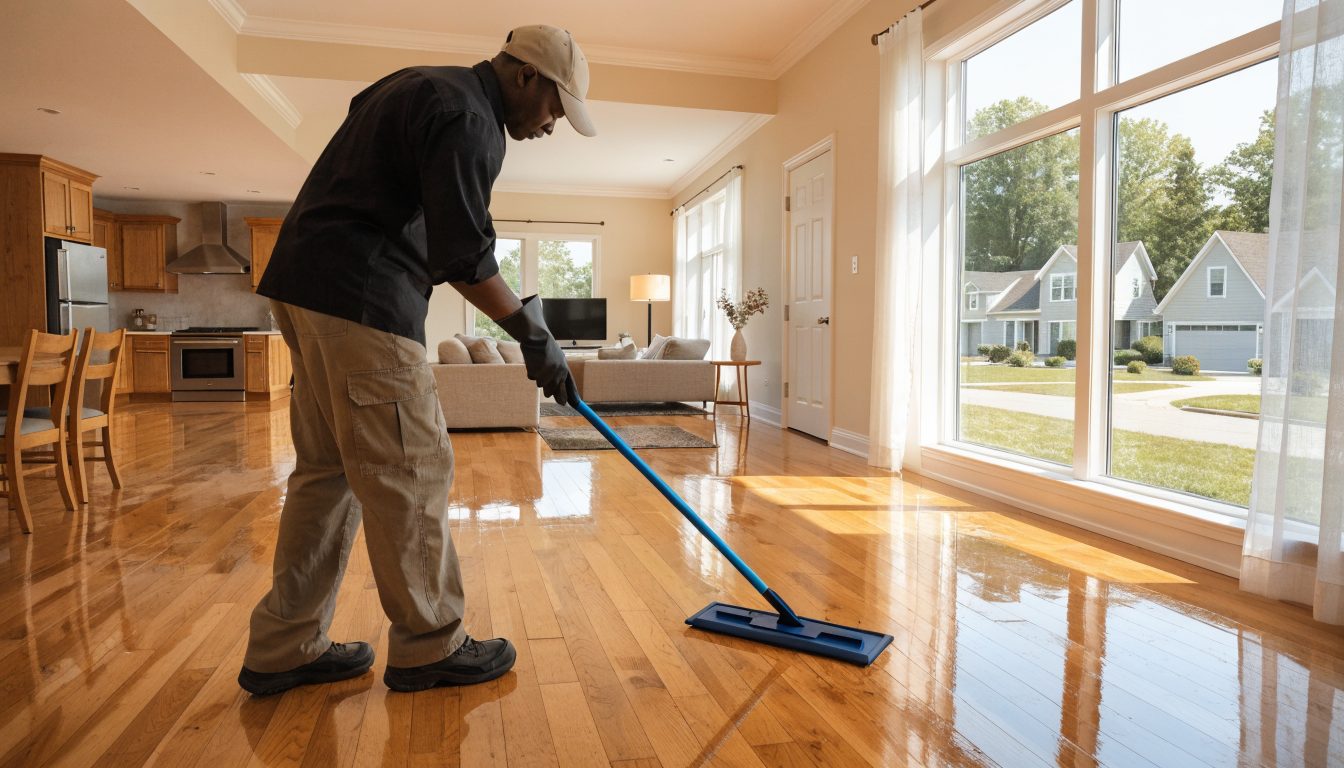
Document condition, clean accessible surfaces, and separate normal wear from damage.
Start with the work that changes the room
Start with photos before you clean. They give you a record of the property’s condition and help you compare it with your move-in documentation. Then read your lease for required tasks, such as carpet cleaning or key return. If something is damaged, a cleaning product is not a solution; contact the property manager rather than risking a worse result.
Use a method you can repeat
Work through the inspection path: inside appliances and cabinets where allowed, bathroom fixtures, floors, window sills, baseboards, and trash removal. Use a gentle degreaser in the kitchen and a non-abrasive bathroom cleaner on fixtures. Be cautious with painted walls and laminate; aggressive scrubbing can leave marks that look worse than the original dirt.
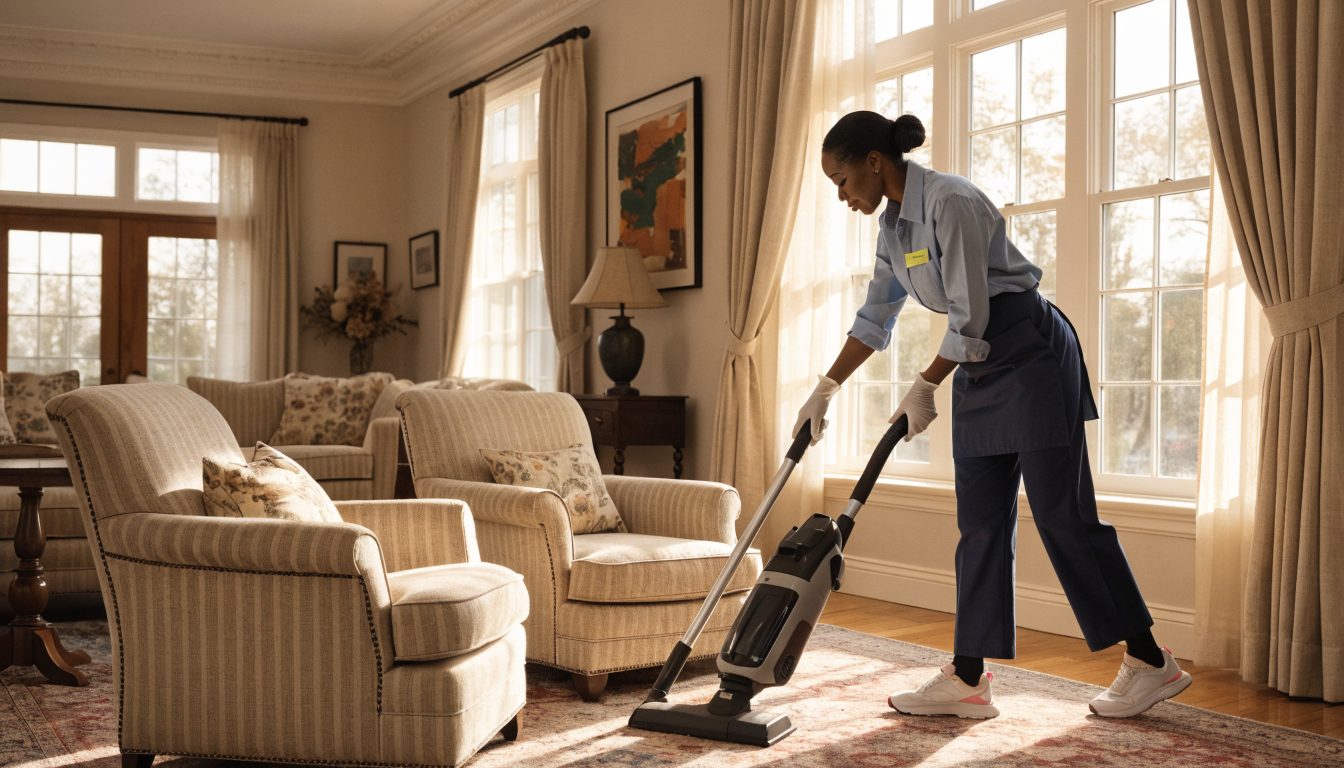
Avoid the shortcuts that create more work
Do not forget the overlooked logistics. Empty the mailbox if applicable, remove items from storage, replace burned-out bulbs if your lease requires it, and keep receipts for any services the manager requested. A final walkthrough with your own checklist reduces the last-minute scramble.
When it is worth bringing in help
When time is short or the property is mostly empty, professional move-out cleaning can cover the labor-heavy cleaning while you manage packing, utilities, and the handoff. Ask for a scope aligned with the lease rather than assuming every task is included.
Turn this guide into a workable plan
For the ongoing work that does not fit your schedule, learn about move out cleaning. You can also review pricing guidance or request a free quote.
Frequently asked questions
Where should I begin if I only have an hour?
Start with the room that affects daily life most, usually the kitchen, bathroom, or entry. Clear clutter first, then clean the most-used surfaces and floor area.
How do I keep the job from coming back immediately?
Choose one small repeatable habit for the area that gets dirty fastest. A ten-minute routine practiced consistently has more impact than an occasional exhaustive clean.