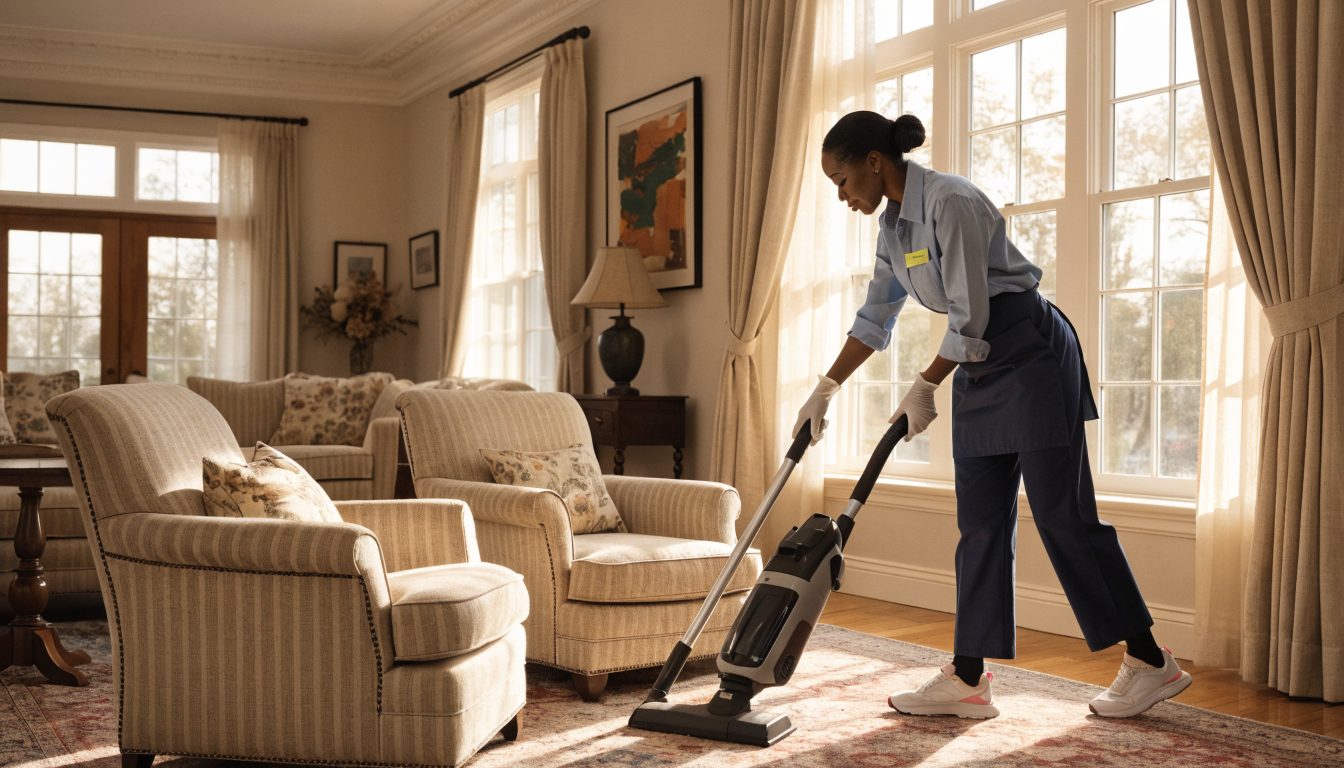
Use a 45-minute reset: laundry, kitchen, bathrooms, floors, then stop.
Start with the work that changes the room
Begin with a five-minute pickup. Put items back where they belong, gather trash, and start one useful load of laundry. Then reset the kitchen: clear the sink, wipe counters, check the refrigerator for leftovers, and set out what the week needs. A clean kitchen changes the feel of the entire home.
Use a method you can repeat
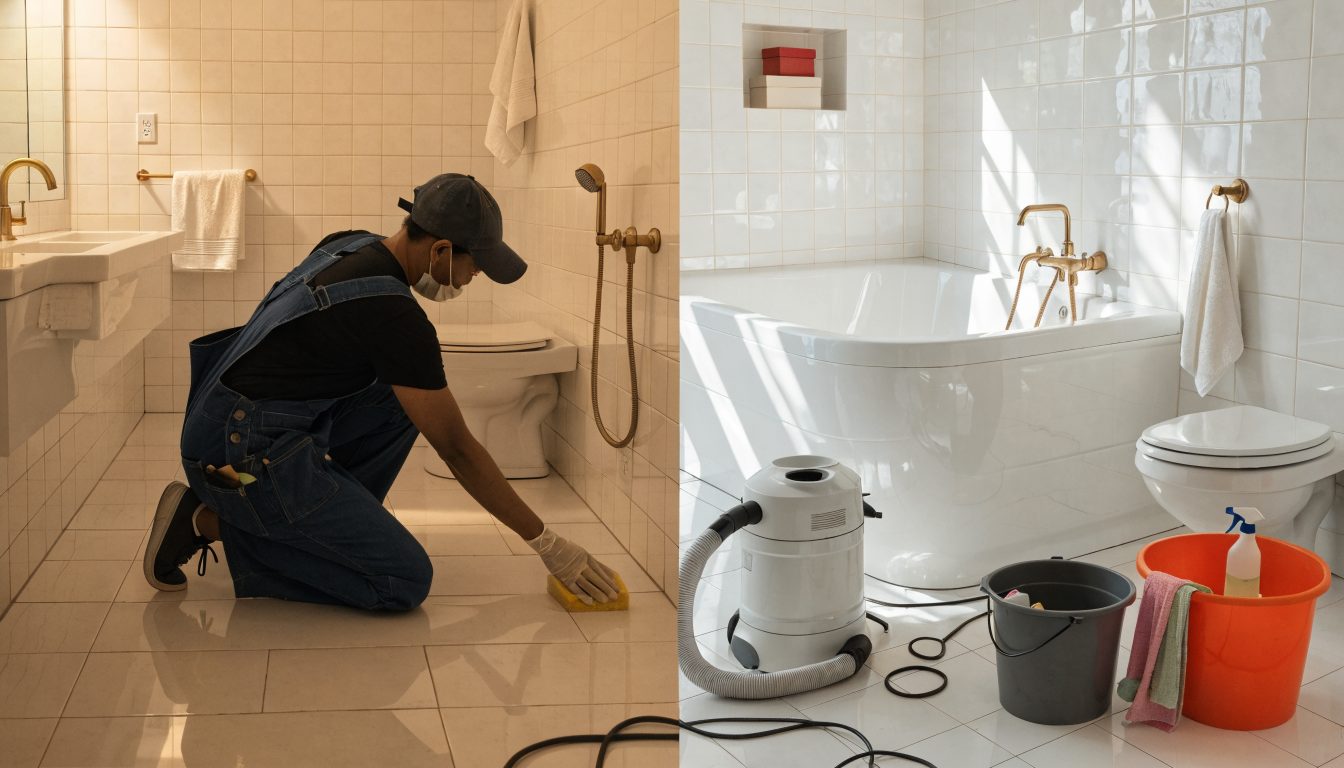
Give each bathroom a quick pass—counter, sink, toilet exterior, fresh hand towel—and then spend ten minutes on floors in the places everyone walks. You do not need to vacuum every guest room on Sunday night. Focus on entries, kitchen, living room, and the bathroom that gets the most use.
Avoid the shortcuts that create more work
End with a look at the calendar. Sports, school events, travel, and guests are a better predictor of cleaning needs than a generic schedule. When you know a hard week is coming, move one small task forward instead of promising yourself a Saturday marathon later.
When it is worth bringing in help
Recurring cleaning creates a reliable baseline for the jobs that are hard to complete during a reset. Your family then uses Sunday for planning and rest, not catching up on every surface in the house.
Turn this guide into a workable plan
For the ongoing work that does not fit your schedule, learn about recurring cleaning. You can also review pricing guidance or request a free quote.
Frequently asked questions
Where should I begin if I only have an hour?
Start with the room that affects daily life most, usually the kitchen, bathroom, or entry. Clear clutter first, then clean the most-used surfaces and floor area.
How do I keep the job from coming back immediately?
Choose one small repeatable habit for the area that gets dirty fastest. A ten-minute routine practiced consistently has more impact than an occasional exhaustive clean.