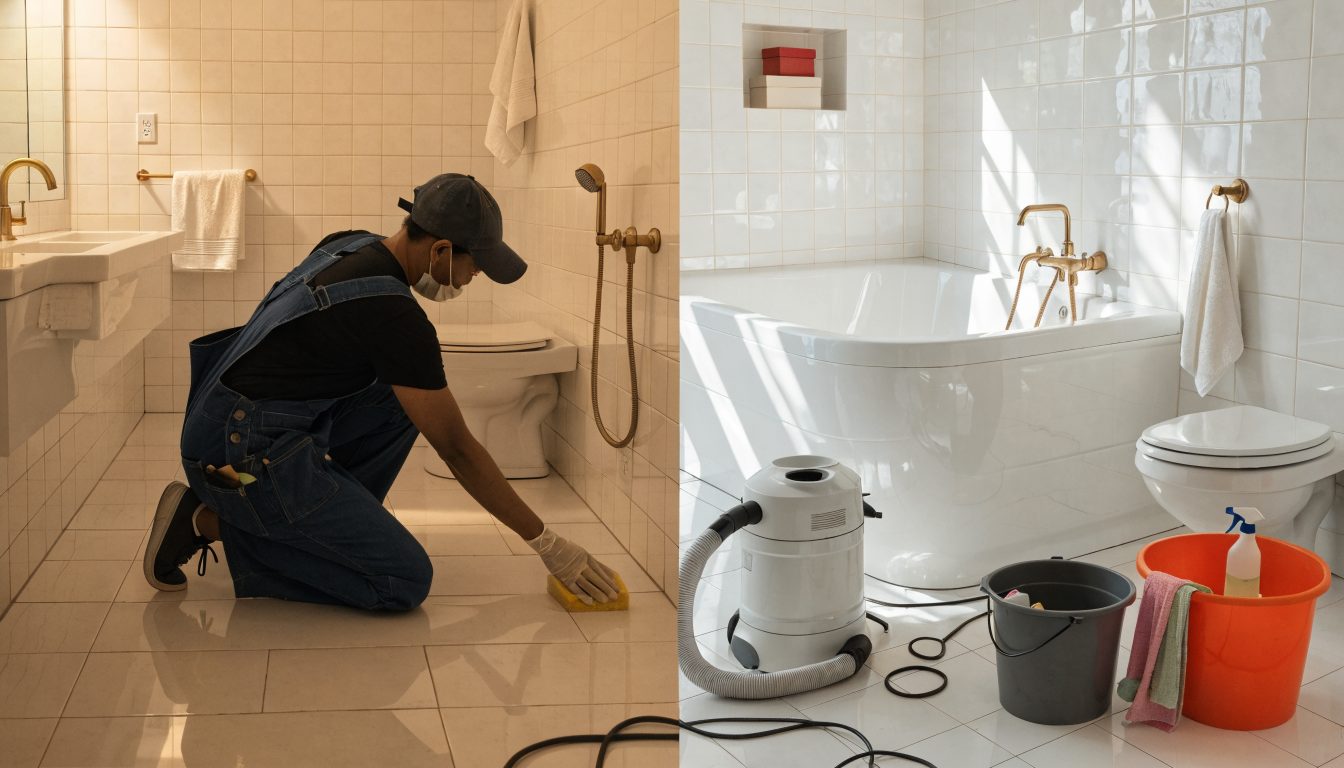
Identify the surface, start gently, and do not mix cleaners.
Start with the work that changes the room
Faucets, shower glass, and sinks often show mineral spots first. Start with a soft microfiber cloth and a product approved for that surface. For many fixtures, a mild acidic cleaner can help with mineral buildup, but natural stone, certain metals, and damaged finishes need different care. Read the label and test a hidden spot before doing a large area.
Use a method you can repeat
Avoid abrasive powders and rough pads unless the manufacturer specifically permits them. They can create tiny scratches that hold more buildup later. Never mix bleach with acidic or ammonia-based cleaners. If you need to switch products, rinse thoroughly and allow the surface to dry first.
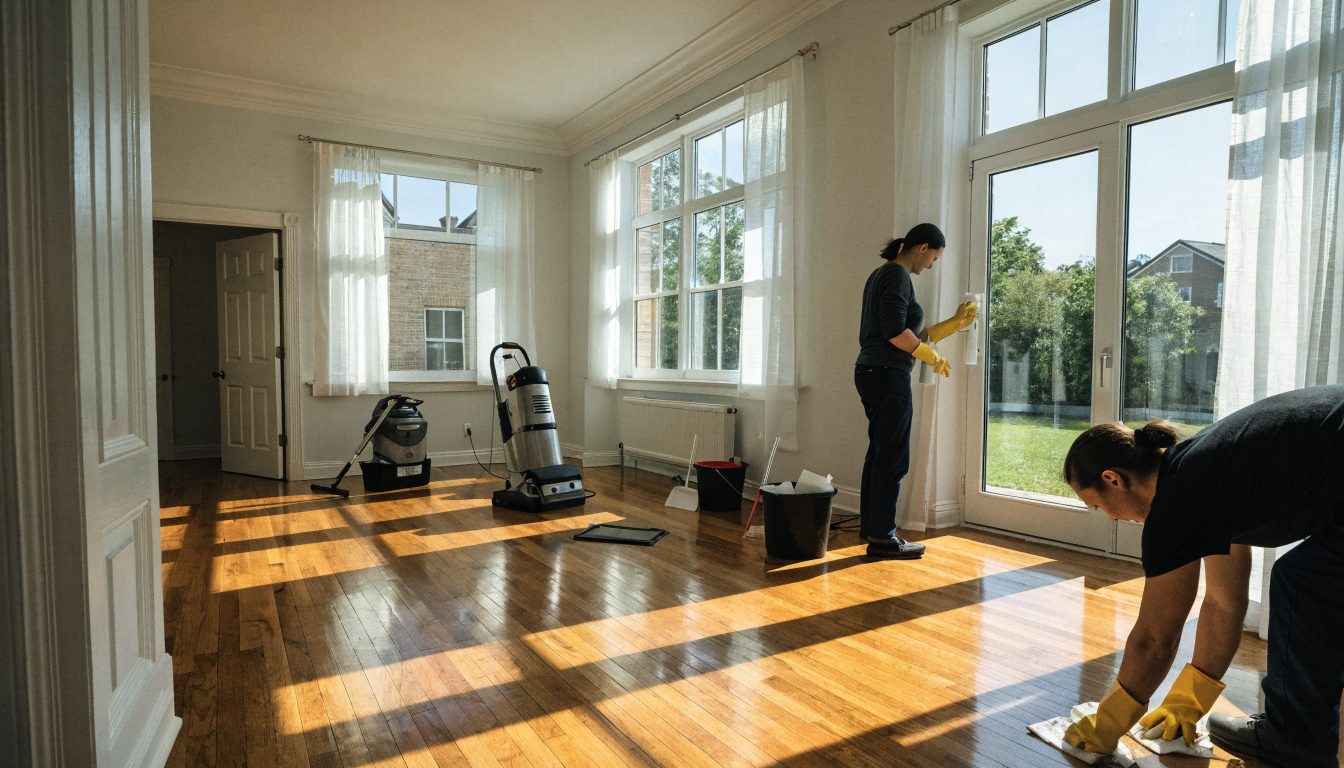
Avoid the shortcuts that create more work
Prevention is less dramatic but more effective. Squeegee shower glass after use, wipe fixtures dry, and clean small spots before they become a cloudy layer. If water pressure, leaks, or persistent deposits are causing a recurring issue, cleaning is only part of the answer; the fixture or plumbing may need attention.
When it is worth bringing in help
A detailed bathroom clean can reset visible mineral buildup with the right products and care. Ask about the surface material when requesting a quote so the cleaning plan is appropriate.
Turn this guide into a workable plan
For the ongoing work that does not fit your schedule, learn about deep cleaning. You can also review pricing guidance or request a free quote.
Frequently asked questions
Where should I begin if I only have an hour?
Start with the room that affects daily life most, usually the kitchen, bathroom, or entry. Clear clutter first, then clean the most-used surfaces and floor area.
How do I keep the job from coming back immediately?
Choose one small repeatable habit for the area that gets dirty fastest. A ten-minute routine practiced consistently has more impact than an occasional exhaustive clean.