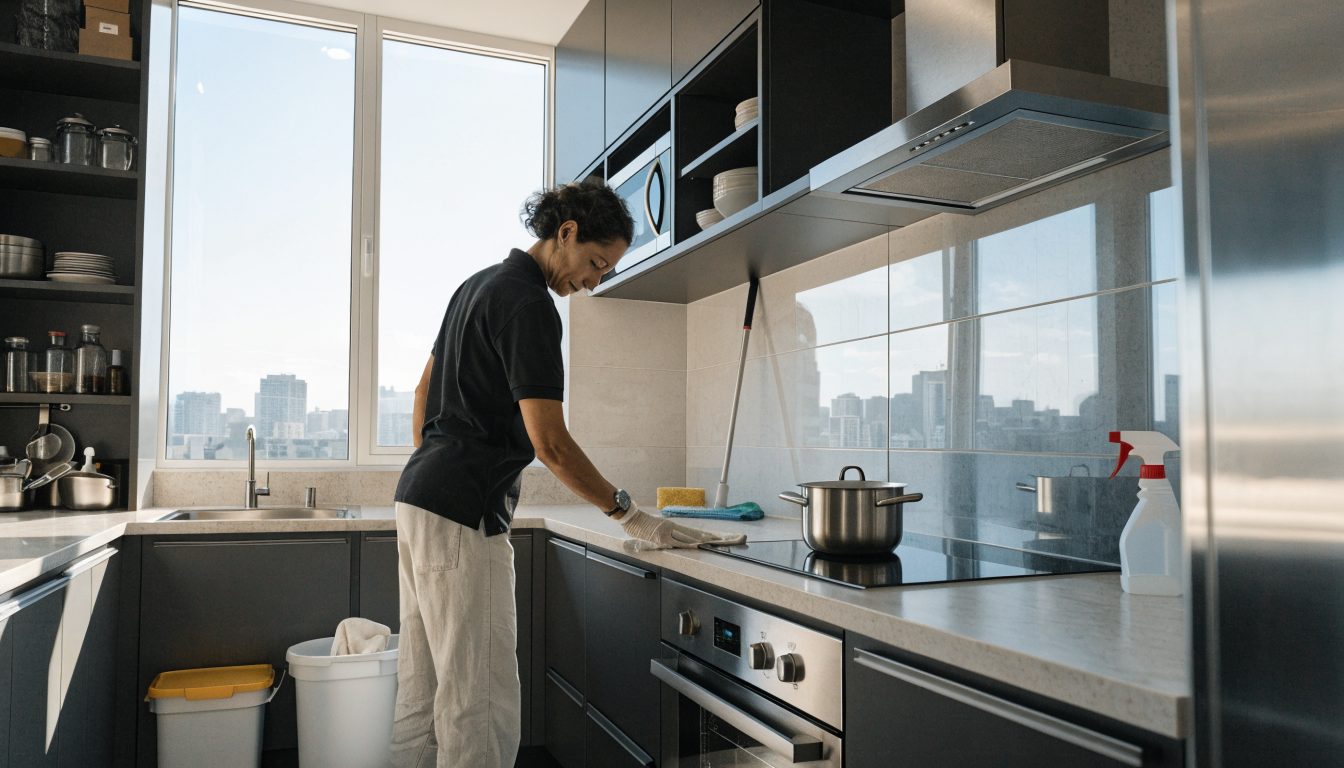
Reset the high-use surfaces daily and assign deeper tasks to a realistic rhythm.
Start with the work that changes the room
After cooking, give attention to the sink, counters, stovetop, and floor directly in front of the range. Those four areas collect the grease, crumbs, splashes, and moisture that become harder to remove later. Let the stovetop cool, wipe spills with a suitable cleaner, and do not leave wet sponges piled in the sink overnight.
Use a method you can repeat
Once a week, clean appliance handles, cabinet pulls, the microwave interior, and the refrigerator shelf that catches the most drips. This is also a good time to check produce drawers and remove anything past its best. Small routines prevent a kitchen from needing a full rescue clean every month.

Avoid the shortcuts that create more work
Use products that match the surface. A rough scrubber can scratch stainless steel and some cooktops; acidic cleaners are not always right for natural stone. When in doubt, use a soft cloth, warm water, and the manufacturer’s guidance. More force is not the same as better cleaning.
When it is worth bringing in help
A recurring service can maintain floors, surfaces, and the kitchen’s surrounding rooms while you keep the cooking reset small. That division of labor is how busy households protect both their home and their evenings.
Turn this guide into a workable plan
For the ongoing work that does not fit your schedule, learn about recurring cleaning. You can also review pricing guidance or request a free quote.
Frequently asked questions
Where should I begin if I only have an hour?
Start with the room that affects daily life most, usually the kitchen, bathroom, or entry. Clear clutter first, then clean the most-used surfaces and floor area.
How do I keep the job from coming back immediately?
Choose one small repeatable habit for the area that gets dirty fastest. A ten-minute routine practiced consistently has more impact than an occasional exhaustive clean.