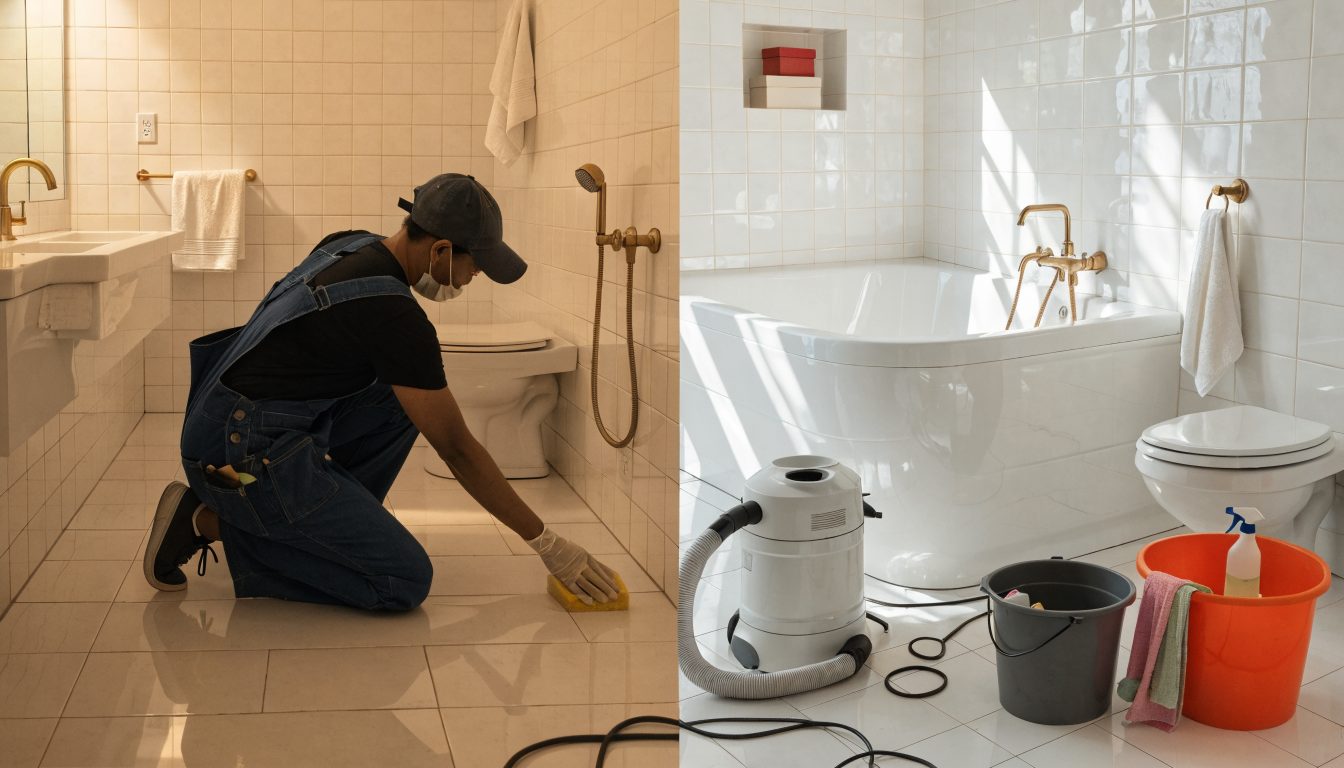
Control tracked-in grit, humidity-prone areas, and the surfaces summer uses hardest.
Start with the work that changes the room
Summer means more open doors, grass clippings, pool towels, and people moving between inside and outside. Put a washable mat at each active entry and vacuum or sweep those zones more often than the rest of the home. It is a small habit that prevents grit from migrating onto hardwood, tile, and rugs.
Use a method you can repeat
Humidity deserves attention in bathrooms, laundry rooms, and basements. Run exhaust fans during and after showers, leave washer doors open between loads when practical, and do not let damp towels collect in a closed hamper. Cleaning visible moisture is useful, but airflow is what keeps the same problem from returning.
Avoid the shortcuts that create more work
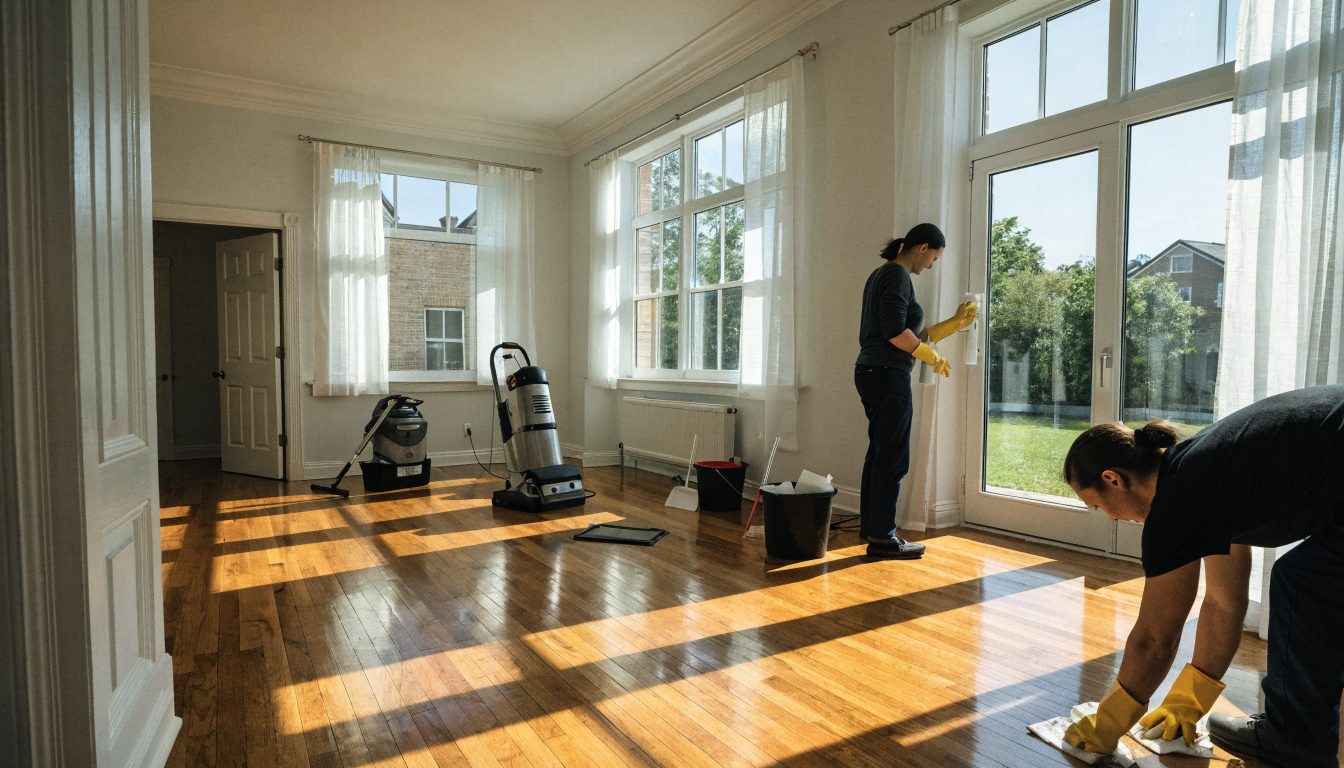
Give outdoor-adjacent surfaces a weekly look: door tracks, glass, porch-facing floors, and mudroom storage. Summer dirt is often a mix of pollen, soil, sunscreen, and moisture, so a mild cleaner and clean microfiber cloth go farther than aggressive products.
When it is worth bringing in help
A recurring cleaning visit can keep the kitchen, baths, and floors from becoming the part of summer everyone postpones. Save your own time for the seasonal tasks that need your judgment, such as outdoor furniture, pantry rotation, and organizing sports gear.
Turn this guide into a workable plan
For the ongoing work that does not fit your schedule, learn about recurring cleaning. You can also review pricing guidance or request a free quote.
Frequently asked questions
Where should I begin if I only have an hour?
Start with the room that affects daily life most, usually the kitchen, bathroom, or entry. Clear clutter first, then clean the most-used surfaces and floor area.
How do I keep the job from coming back immediately?
Choose one small repeatable habit for the area that gets dirty fastest. A ten-minute routine practiced consistently has more impact than an occasional exhaustive clean.