The most efficient cleaning order follows two simple rules: top to bottom, and dry to wet. Dust and debris from high surfaces (shelves, ceiling fans) falls onto lower surfaces and floors, so cleaning ceilings and shelves before floors means you're not redoing floor work. Dry tasks like dusting and decluttering should happen before wet tasks like mopping, since wet surfaces attract and hold dust that would otherwise just get swept away.
The Two Rules That Explain Everything Else
Almost every "correct" cleaning order comes down to two principles: top to bottom, and dry to wet. Gravity means dust and debris from high surfaces settles lower, so working top-down prevents re-contaminating areas you already cleaned. And dry cleaning (dusting, vacuuming) should precede wet cleaning (mopping, wiping) because wet surfaces are stickier and hold onto dust rather than letting it be swept or vacuumed away easily.
A Practical Room-by-Room Sequence
- Ceiling fans and light fixtures: always first — this is the highest point in most rooms, and dust here will fall onto everything below
- Shelves, dressers, and other furniture surfaces: dust these next, before floors, since dust falling from here lands on the floor
- Mirrors and windows: clean glass after dusting nearby surfaces but before floors, since spray can drip
- Counters and other flat surfaces: wipe down after dusting is complete throughout the room
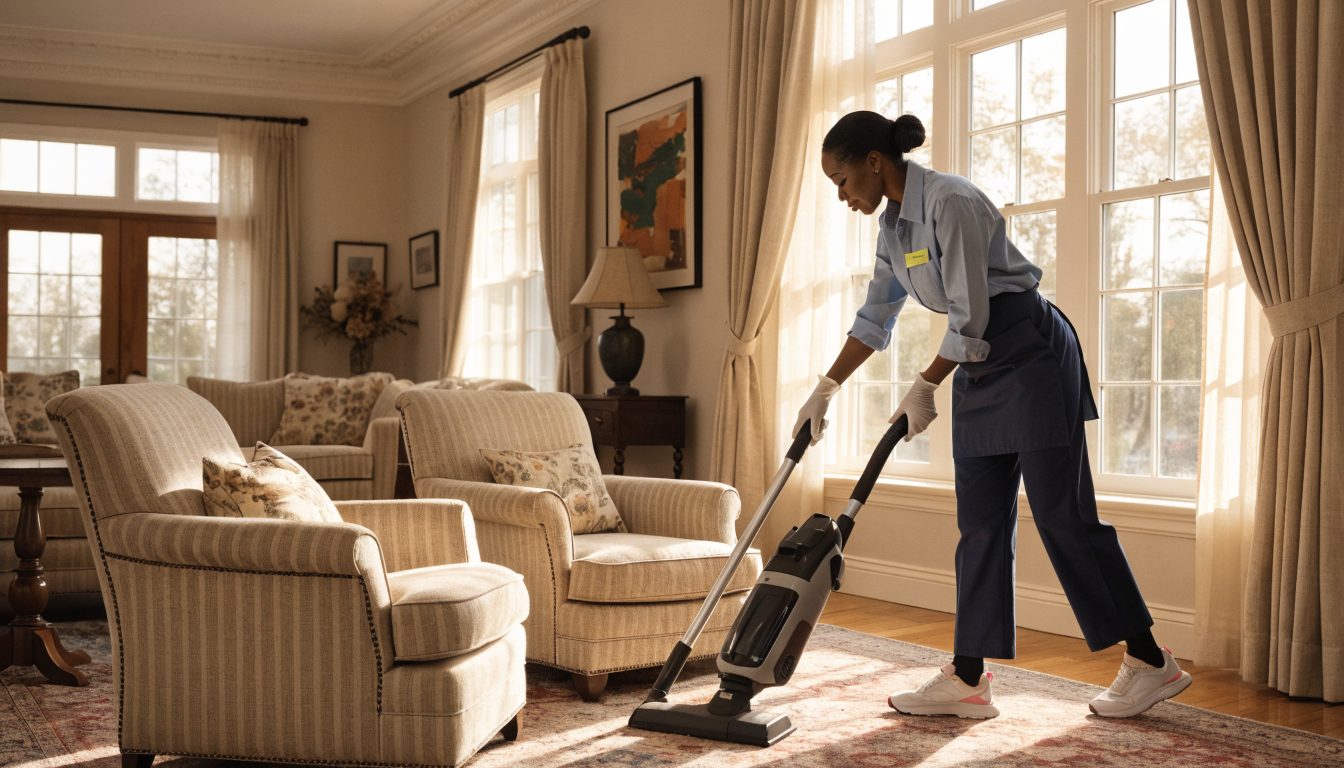
- Vacuum or sweep: after all dusting is done, so newly settled dust gets picked up rather than left behind
- Mop: always last — mopping before vacuuming means pushing dry debris into wet floors, creating more work, not less
For the Whole House, Not Just One Room
The same top-to-bottom logic applies across an entire home, not just within a single room — if your home has multiple levels, clean the upper floor before the lower floor for the same reason: dust and debris naturally migrate downward as you clean. Save the areas closest to the exit (entryway, mudroom) for last, so foot traffic in and out during cleaning doesn't undo progress in already-finished areas.
The Most Common Order Mistakes
- Vacuuming before dusting, which means re-vacuuming after dust settles from higher surfaces
- Mopping before vacuuming, which pushes solid debris into wet floors instead of removing it cleanly
- Cleaning bathrooms before kitchens (or vice versa) without a specific reason — the bigger inefficiency is usually within a room, not between rooms
- Starting with the room that bothers you most instead of following a logical top-to-bottom, room-to-room flow through the house
Ready to Skip Straight to Clean?
Our team handles it — get a free, firm quote based on your actual home, usually within one business hour.
Get Your Free Quote