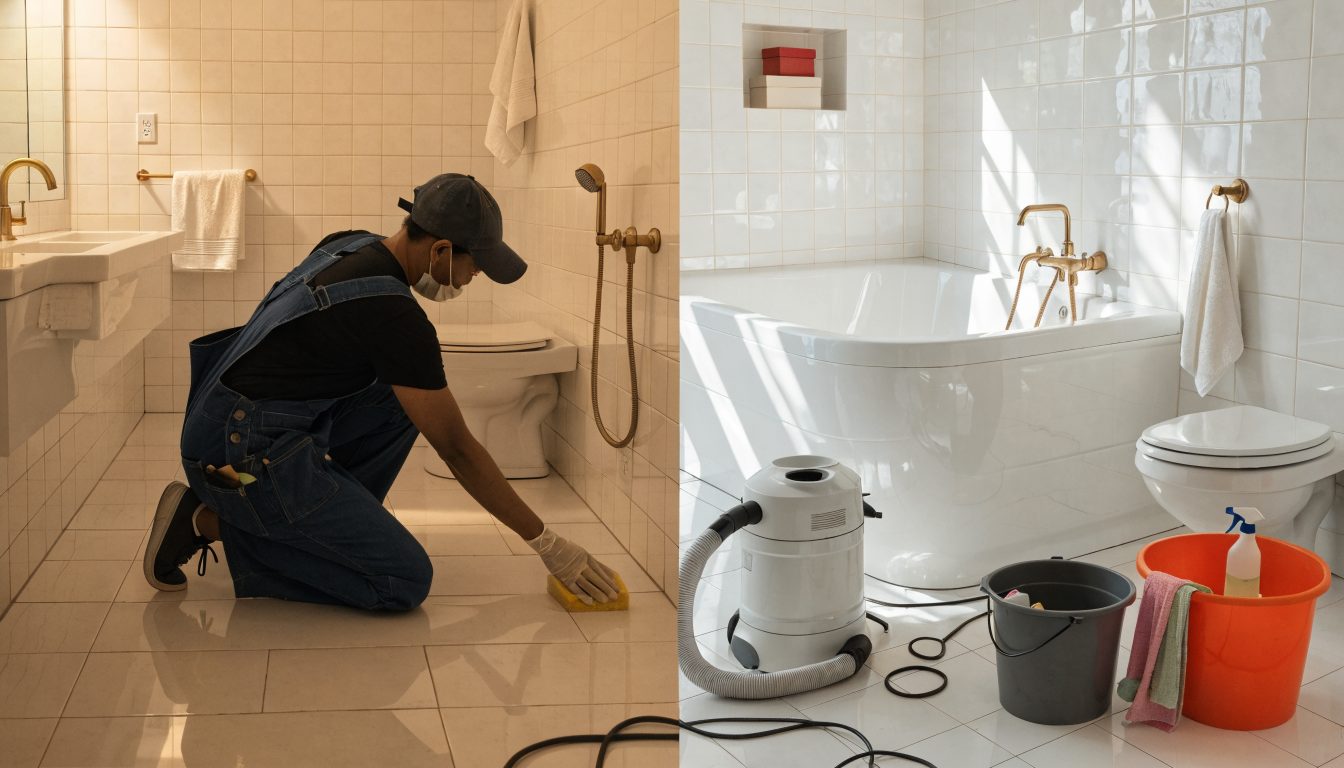
Bathroom mold grows when moisture from showers and humidity has nowhere to go — the underlying cause is almost always inadequate ventilation, not just infrequent cleaning. Indiana's humid summers and poorly ventilated bathrooms (fans that aren't run long enough, or aren't strong enough for the room size) create ideal mold conditions. Cleaning removes existing mold, but running the exhaust fan longer, addressing any bathroom fan issues, and drying wet surfaces after showers is what actually prevents it from coming back.
The Real Cause Isn't Dirt — It's Trapped Moisture
Mold needs moisture and organic material (soap residue, skin cells, grout) to grow, and bathrooms provide both constantly. The actual variable that determines whether mold becomes a recurring problem is how quickly that moisture gets removed from the air after a shower — which comes down to ventilation, not how often you clean.
Why This Is a Bigger Issue in Indiana Specifically
Central Indiana's humid summers mean the air pulling moisture out of a bathroom is already carrying more moisture itself, making exhaust fans work harder to actually clear the room. A fan that's adequate in a dry winter month may not keep up during a humid July, which is why a lot of households notice mold issues get worse seasonally rather than staying constant year-round.
Fixing the Actual Problem
- Run the fan longer: leave it running 20–30 minutes after a shower, not just during it, to fully clear humidity from the room
- Check fan strength: if a bathroom still feels humid well after showering with the fan running, the fan itself may be undersized or clogged with dust — a professional can assess this
- Crack a window when weather allows: additional airflow helps on top of exhaust fan use, especially in smaller bathrooms
- Squeegee shower walls: removing standing water immediately after a shower cuts down on the moisture mold needs to establish
Cleaning Mold That's Already There
For minor surface mold on tile and grout, a solution of water and either vinegar or a dedicated mold-and-mildew cleaner, left to sit for several minutes before scrubbing, handles most cases. For mold that's spread significantly, discolored large areas of grout, or shows up on drywall or ceiling material, that's typically a sign the moisture problem has been ongoing longer and may need more than surface cleaning to fully resolve.
Ready to Skip Straight to Clean?
Our team handles it — get a free, firm quote based on your actual home, usually within one business hour.
Get Your Free Quote