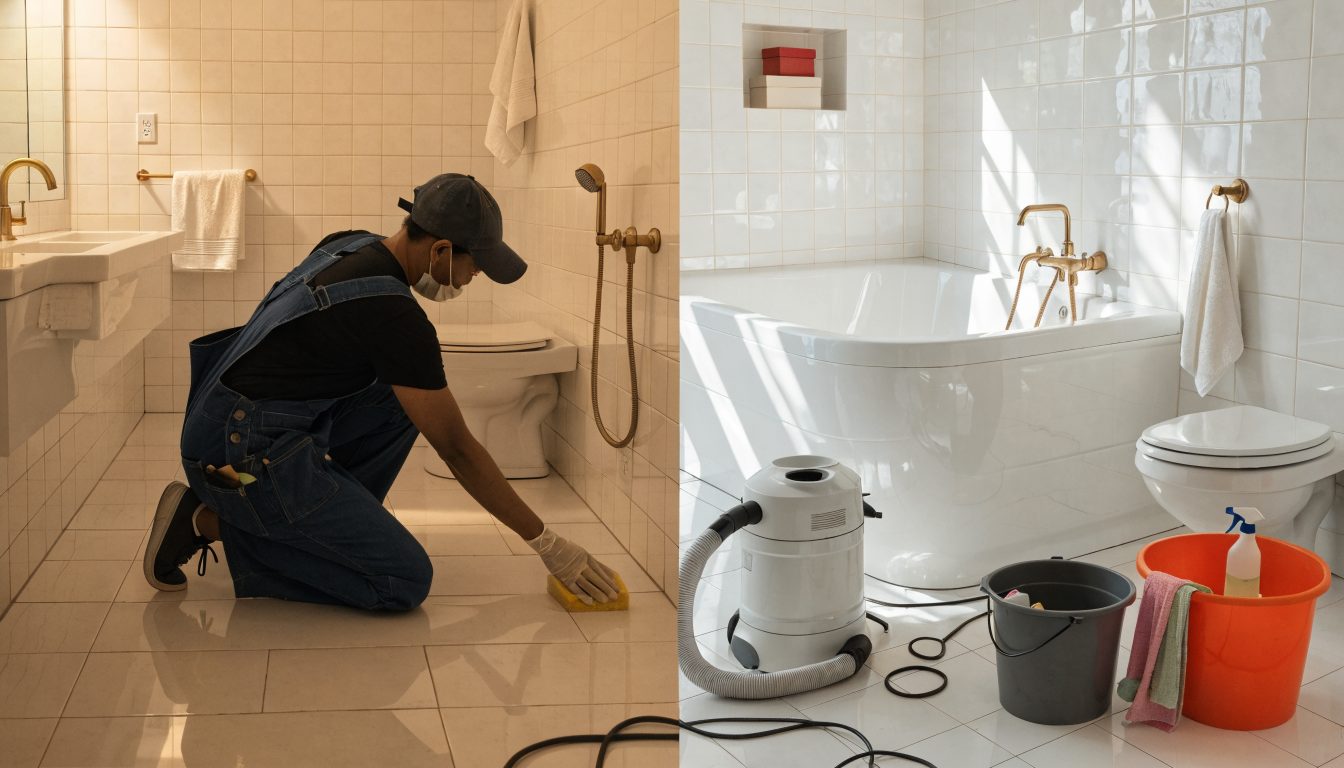
Cleaning support for an aging family member usually works best as a recurring, predictable visit — often bi-weekly or monthly — that prioritizes fall-hazard areas (floors, bathroom surfaces, clutter in walkways) over cosmetic deep-cleaning. The bigger challenge for most families isn't logistics, it's the conversation: framing it as support that helps someone stay independent longer, not a sign they can't manage on their own.
What to Prioritize in a Senior-Focused Clean

A safe, comfortable home environment for aging in place
A cleaning visit for an aging parent isn't just a lighter version of a standard clean — the priorities shift toward safety, not just appearance. Slippery bathroom floors, clutter in hallways and walkways, and buildup in high-touch areas matter more here than they might in a typical household.
- Bathroom floors and tub/shower surfaces: soap scum and water residue create real fall risk, especially on tile
- Kitchen and medication-adjacent counters: keeping these areas genuinely clean matters more for someone managing daily medications and meals independently
- Walkways and floors: removing clutter buildup from hallways and entryways reduces trip hazards, not just visual mess
- Laundry support: many families add laundry to a senior-focused visit, since it's a physically demanding task that becomes harder with mobility changes
How Often Makes Sense
Bi-weekly or monthly recurring visits tend to work well for most situations — frequent enough that safety-relevant areas don't get neglected, infrequent enough to feel manageable rather than intrusive. Some families start with a single visit to see how it goes before committing to a regular schedule, which is a reasonable way to test the fit.
Having the Conversation Without It Feeling Like a Loss of Independence
This is often the harder part. Framing matters: positioning cleaning help as something that protects independence — fewer fall risks, less physical strain, more energy for things they actually want to do — tends to land better than framing it around what someone can no longer do themselves.
A practical approach many families use
Involve the person in the decision rather than presenting it as already arranged. Offer to sit in on the first visit together, and treat the first cleaning as a trial rather than a permanent change. Small amounts of control over the schedule and who comes into the home go a long way toward the arrangement feeling supportive rather than imposed.
Ready to Skip Straight to Clean?
Our team handles it — get a free, firm quote based on your actual home, usually within one business hour.
Get Your Free Quote